Build an Organisation That Understands Its People
Team imbalances, hidden strengths and leadership potential - measured across 21 dimensions, not assumed.
5 ways CCSS transforms organisations
From team optimisation to leadership development - strategic insights into your organisation's human capital.
Team optimisation
Problem Teams don't function optimally - conflicts and misunderstandings slow down work.
Solution Analysing the cognitive styles (BD), interaction styles (SOI) and EI profile of each member shows where the imbalance is and how to redistribute roles.
Leadership development
Problem Future leaders are hard to identify objectively - promotions depend on impressions.
Solution EI leadership predisposition + PRES-D management preferences + BD visionary capacity = a complete picture of leadership potential.
Succession planning
Problem The departure of key people creates a gap that threatens continuity.
Solution Profiles of existing leaders serve as a benchmark - find people with similar or complementary profiles before the gap appears.
Organisational diagnostics
Problem It's unclear why some parts of the organisation underperform, despite the effort.
Solution Assessing a wider group + pattern analysis reveals misalignments, team deficiencies, and hidden potential.
Remote teams
Problem Distance makes understanding colleagues harder - misunderstandings grow, cohesion declines.
Solution Profiles help the team understand each other's communication and working styles - trust builds even at a distance.
An IT company with 80 employees, three teams with high turnover. The diagnostics reveal an imbalance in leadership styles and give a clear basis for redistributing roles - before the next people leave.
Book a diagnostic for your team →Results
What organisations gain with CCSS
Data instead of assumptions
When you know how your teams really work - across 21 personality dimensions - you can make decisions that make a measurable difference.
An objective map of strengths and imbalances across teams
A clear basis for redistributing roles and responsibilities
Data to reduce conflict instead of guesswork
Recognising leadership potential inside the existing team
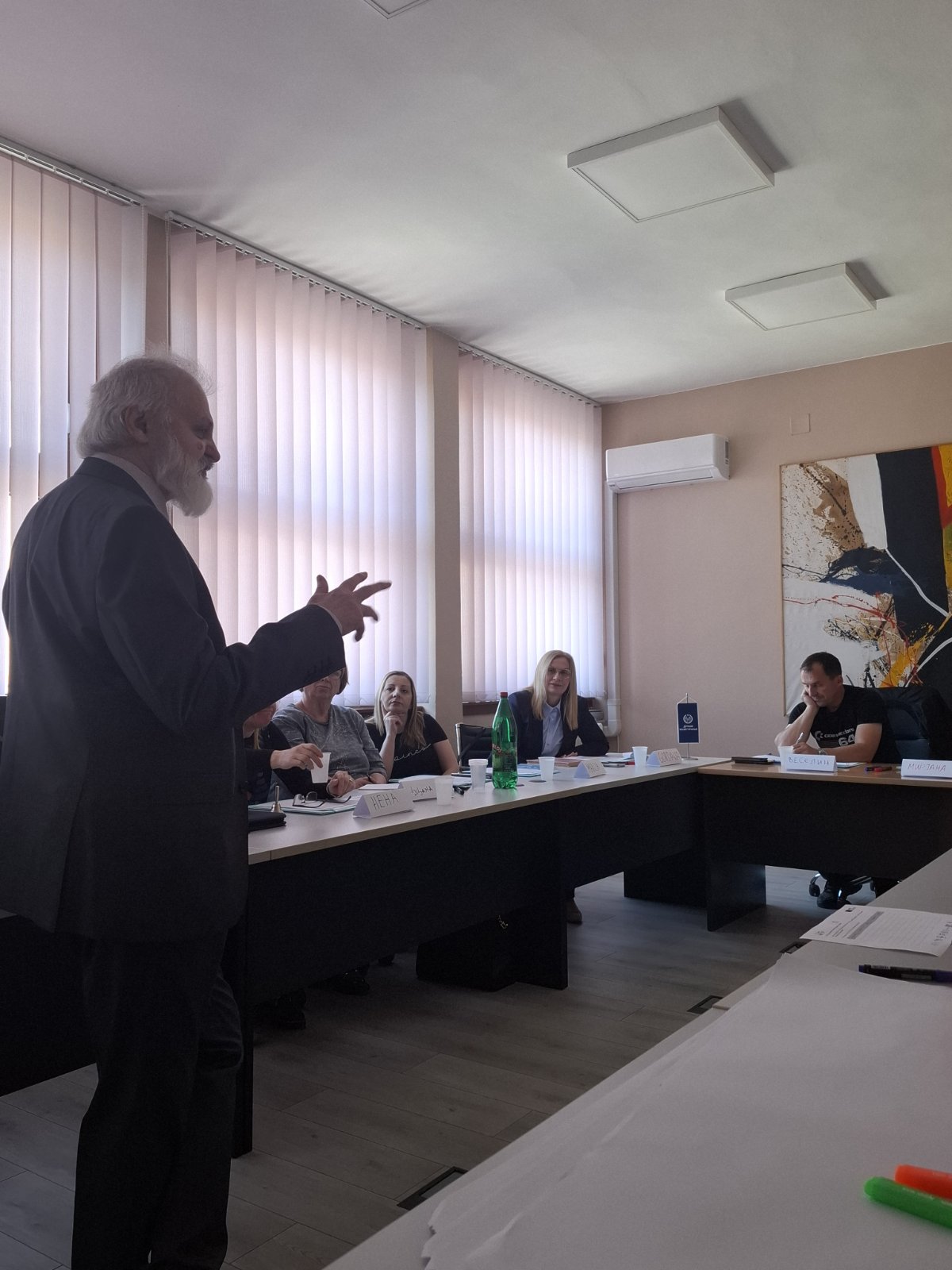
The methodology does not stop at the report.
A report starts the conversation, it does not end it. Team workshops show how to read a profile, how to talk about differences, and how to assign roles so people complement each other.
The author of the methodology works directly with your people - in your room, on your examples.
Book a diagnostic for your team
Tell us which team you want to analyse - we will show you how CCSS reveals dynamics, imbalances, and hidden potential.