4 instruments. 21 dimensions. A complete picture of the candidate.
A single interview shows you how a candidate presents themselves. Our four instruments show how they actually work, lead, think, and collaborate. Objective data instead of impressions - a clear report the same day. We developed and validated all four instruments ourselves, along with the scoring and the matching algorithms.
How the candidate actually works
PRES-D shows how a candidate naturally approaches work - how they organize tasks, make decisions, and behave when circumstances change. Instead of an interview impression, their working style in black and white.
- Whether they're driven by results or by an orderly process
- Whether they thrive on rules and structure, or on freedom
- The D indicator: an early signal of passivity tendency - before it becomes a problem
D · passivity tendency - below the risk threshold
Who can lead - and hold up under pressure
EI reveals the emotional side of a candidate - how they manage themselves, how they collaborate, and how they hold up when things get tense. That's where you see the difference between a doer and a leader.
- Who naturally takes the lead, and who is the team's pillar of support
- How they communicate and build relationships day to day
- How composed and dependable they stay as the pressure rises
Analyst or visionary
BD tells you how a candidate thinks and solves problems - through facts and concrete steps, or through ideas and the bigger picture. So you know in advance whether they suit the job and complement the team.
- Solutions through numbers and logic - or vision and new ideas
- Some roles call for an analytical mind, others a creative one - see it in advance
- Whether they fill the gaps in how your existing team thinks
Leaning toward the visionary approach - ideas and the bigger picture, with enough analysis to verify them.
For the "Frontend developer" role: a fit - the team is mostly analytical
The role they naturally take on
Brings tempo and pushes things forward. Paired with a connector, delivers the best results; with another driver - possible friction over direction.
How they fit into the team
SOI shows the role a candidate naturally takes on among people and the energy they bring. No style is better than another - but when you know the styles in your team, you see in advance where the synergy is and where conflict is possible.
- The place they naturally take when working with others
- Pushes people forward, brings them together - or is strongest solo
- Where the synergy with colleagues is, and where friction is possible
Candidate comparison
Profile Matching - the right candidate for the right role
From four profiles to one measure
The results of all four instruments come together into a single picture of the candidate. You compare that picture with the requirements of the role and with your existing team - so instead of a gut feeling you get a measure.
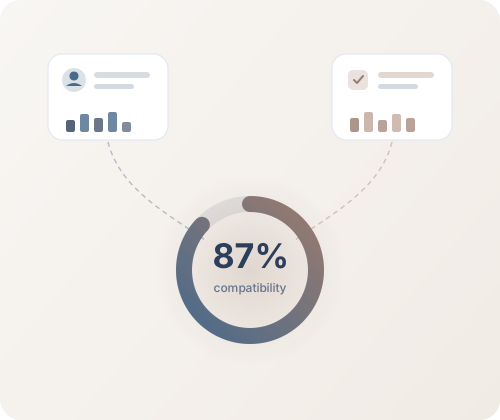
One complete picture
Everything the four instruments measure comes together into a single candidate profile. You don't look at fragments - you see the whole.
Fit with the role
You define what the ideal candidate for a role looks like, and the system shows how well each one fits. A precise measure instead of a subjective impression.
Team dynamics
See how a candidate will fit into your existing team - complementary strengths and possible friction, before it arises.
Every recommendation is explained
You don't just get a score, but the reasoning behind it. You can trust the decision and defend it to others.
See the instruments in action
Book a demo and see how four instruments and 21 dimensions work together - from tests the candidate takes at their own pace, to a clear report and a comparison with the role, the same day.